Performative sculpture for 16 harps and live electronics
Commissioned for Zeiträume Basel – Biennial for New Music and Architecture
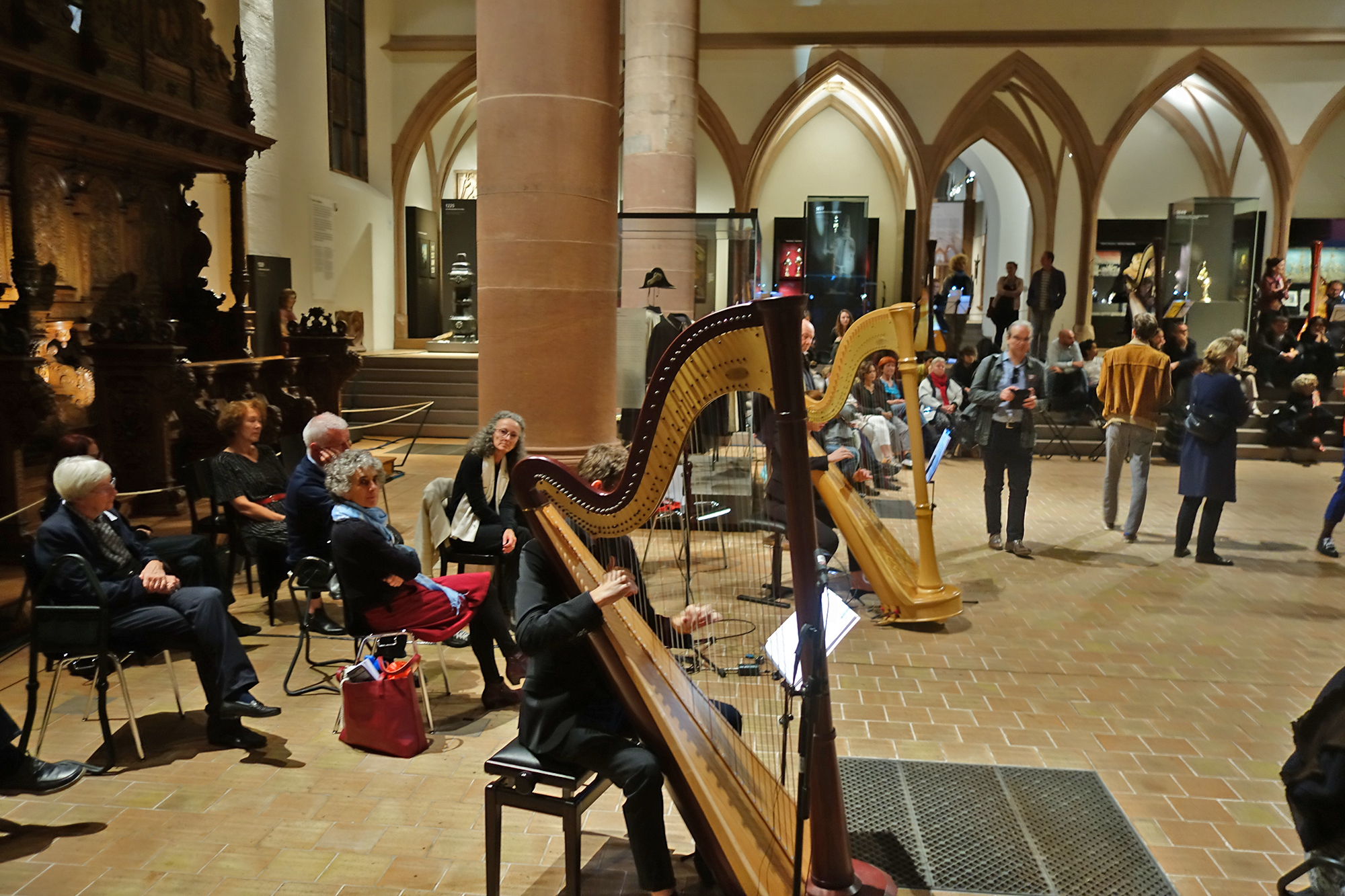
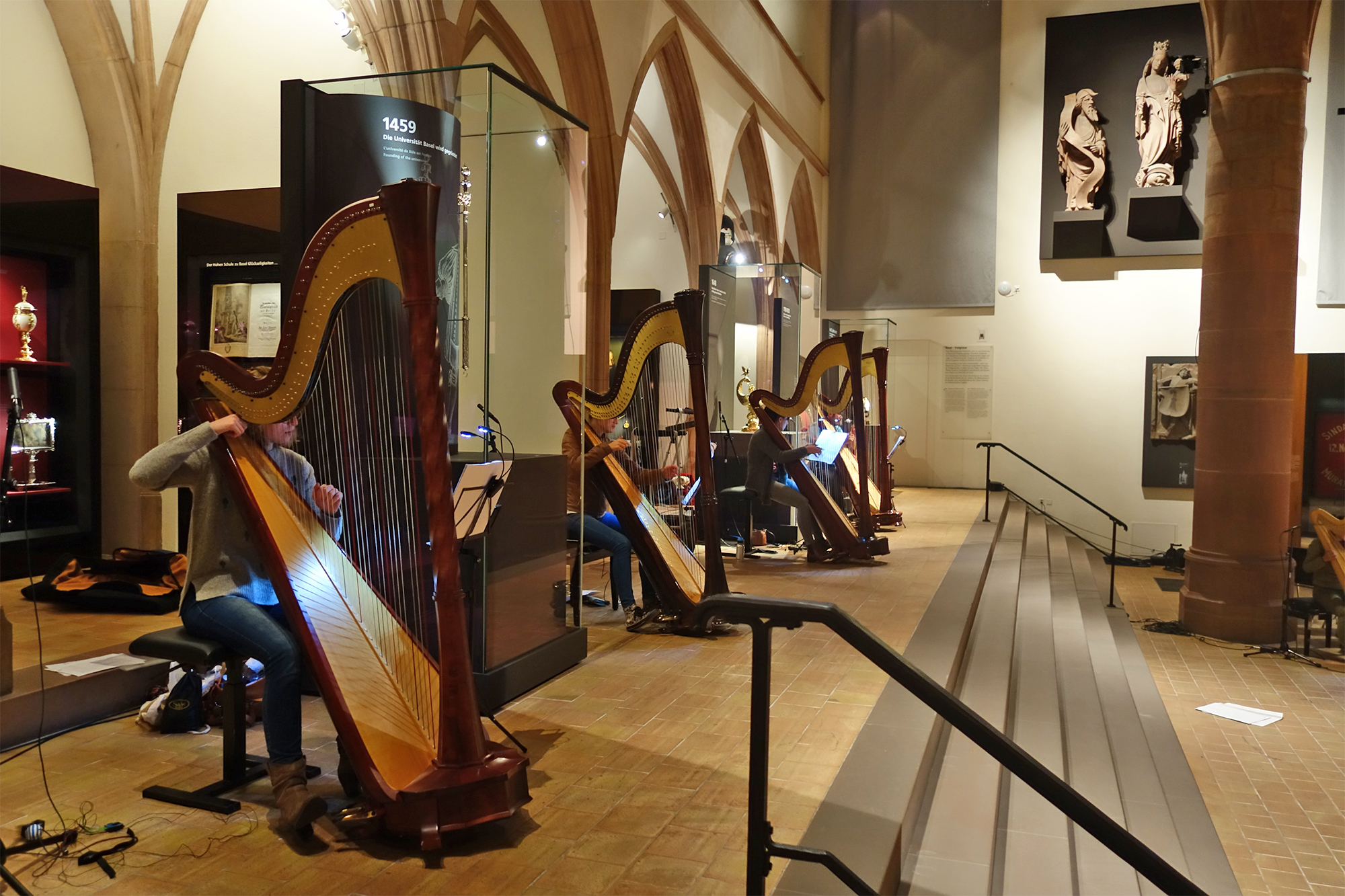
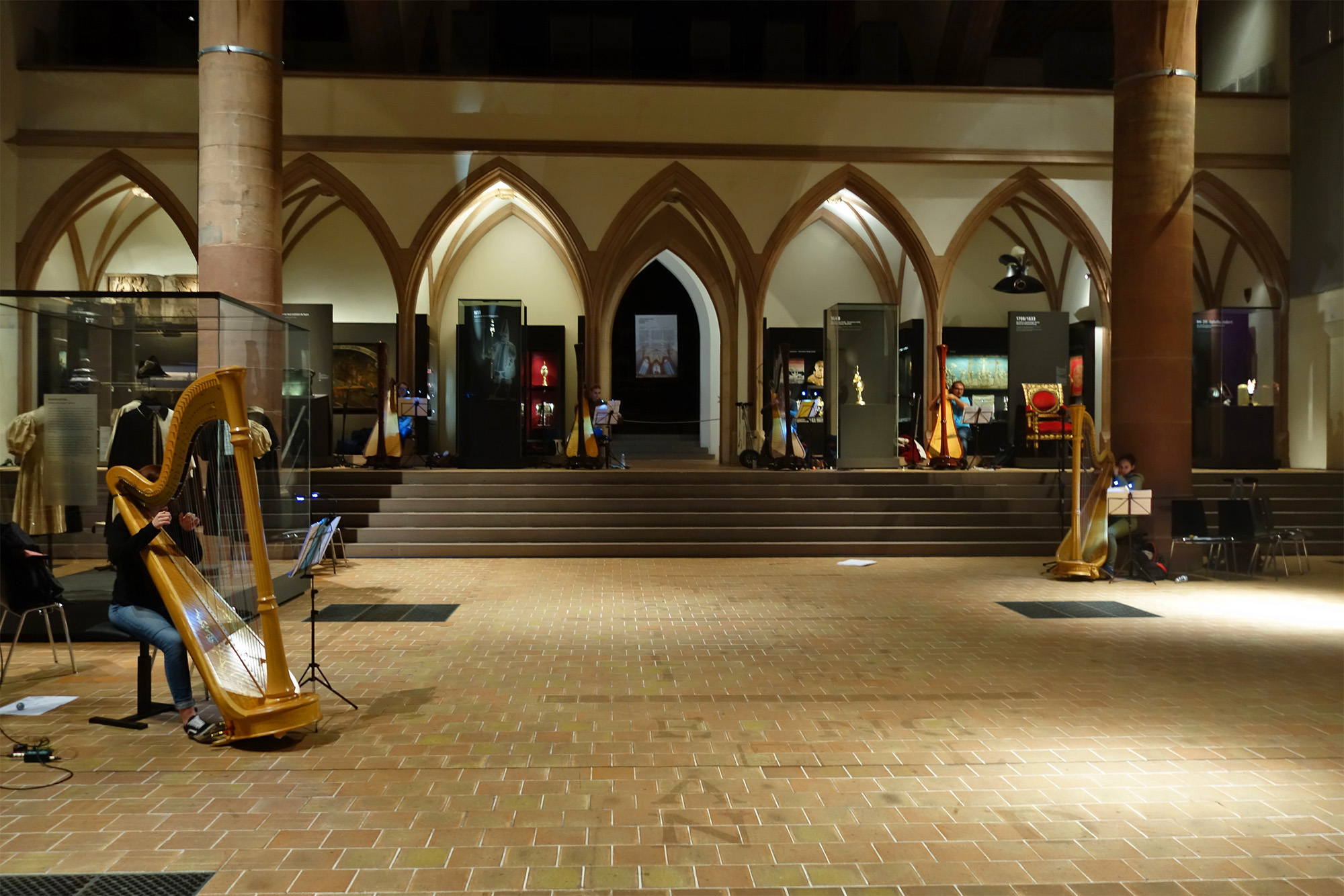
A sophisticated feedback system is used to discover and explore the characteristics, tonal nuances and facets of the timbres of the individual harps. This precise filtering of frequencies is repeated until, at the end, the filtered sounds of the resonating bodies remain ‘frozen’ in the room as an installation sculpture, thus transitioning from a performative process to an installation sculpture.
Premiered on 23 September 2017 at the Barfüsserkirche Basel (CH).
Duration 30 min.
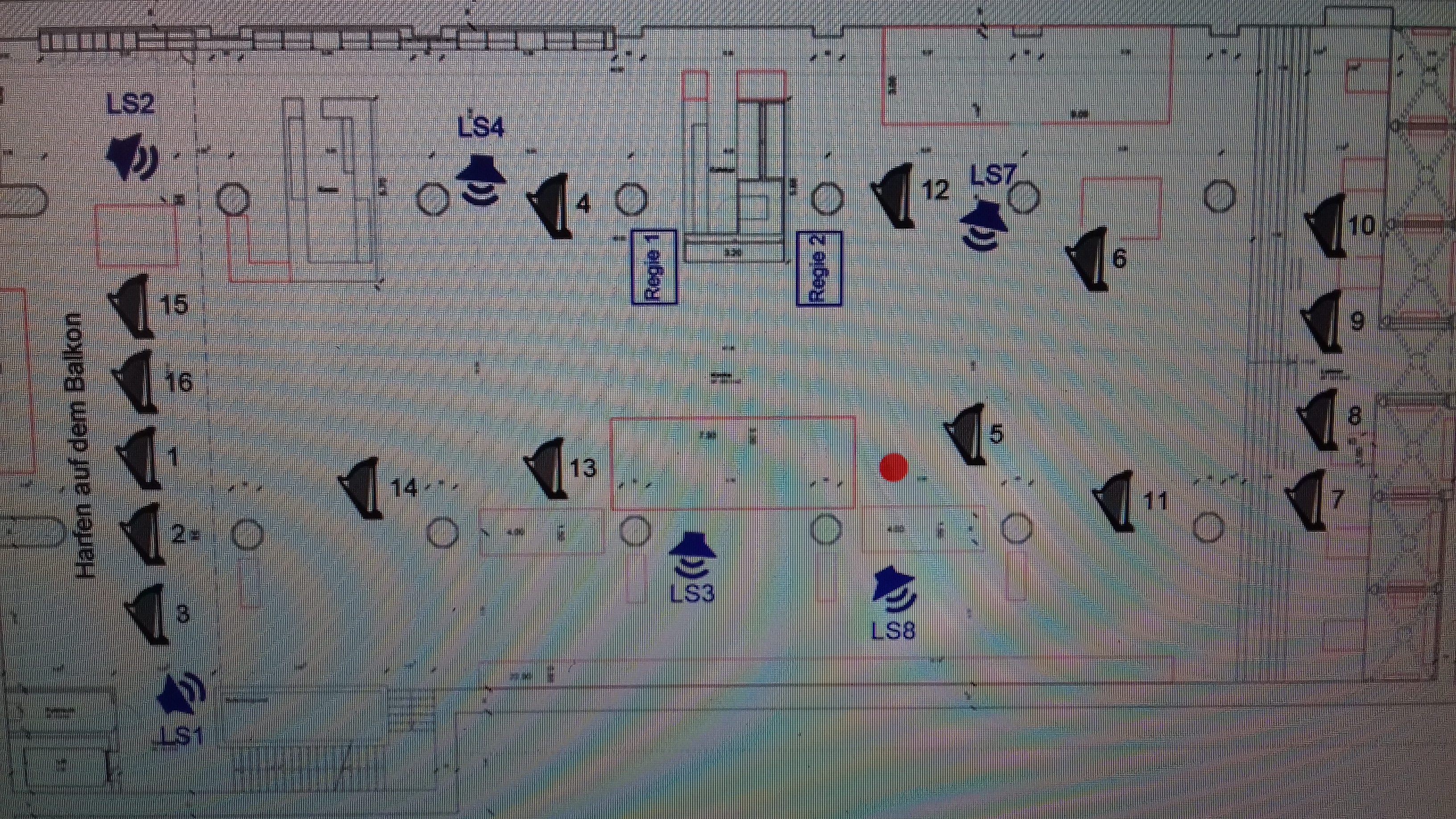
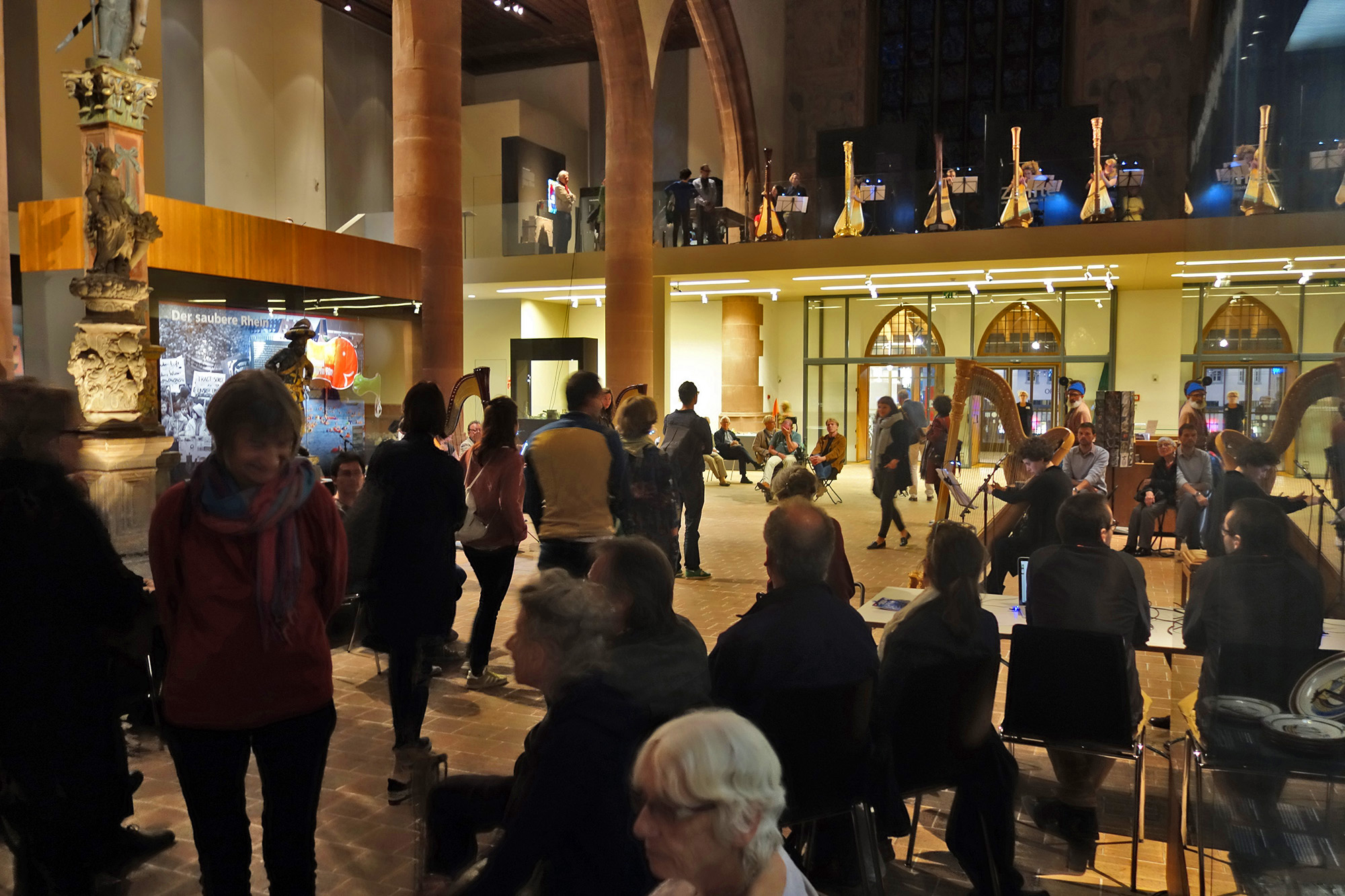
Commentary on Bruchstücke aus Alabaster (Fragments of Alabaster)
In my thinking and artistic work, categories, in the sense of classification systems designed to reduce complexity, are irrelevant and often a hindrance, in stark contrast to the synergies that can arise from the exchange of different working methods within and outside the arts. Thus, my works also attempt to convey a philosophical openness in their instructions or attitude, which creates a space for the interpreter or the process, i.e. the course of the work itself.
The recipient should also be given free space. That is why the installation form of my works, which are often based on architecture and visual art, is just as important to me as the performative form. This is because the large arcs of time that a sound installation, for example, makes possible allow time to be used as a means of transporting content or aspects of music that do not actually take place in time. Thus, time is not decisive in installation works for understanding a composition. A sound installation therefore gives the recipient the opportunity, similar to viewing a picture, to move freely in the space, to test different angles, to leave and return.
My artistic approach is therefore often based on the methods of visual artists and makes use of the physical properties and phenomena of architectural space. Music thus serves primarily as a medium, as a form of expression for artistic processes.
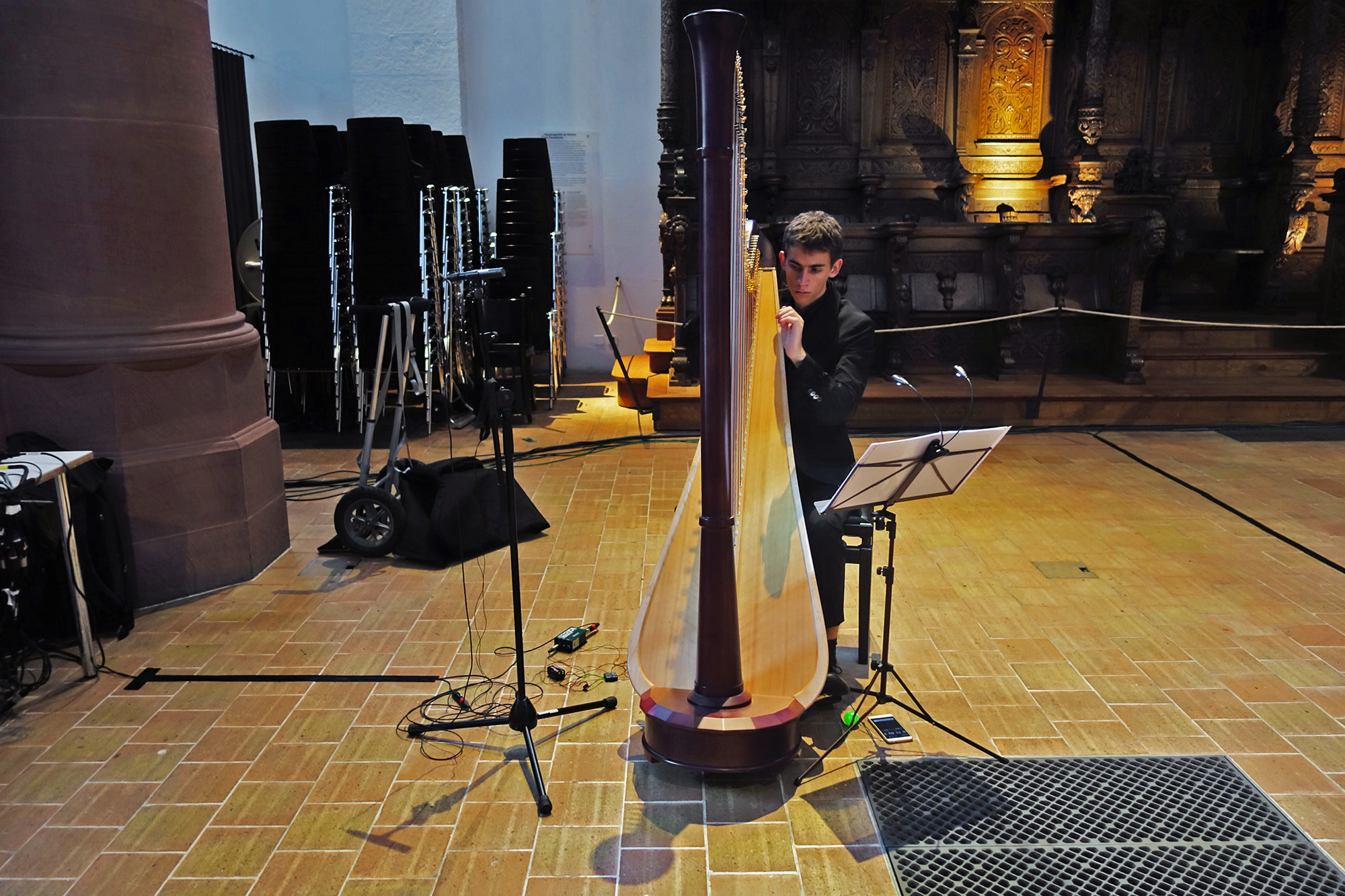
The new work, in which the instruments themselves – and above all their resonance chambers – are brought to the fore, also embodies this installation concept. Each instrument is equipped with a microphone and a type of loudspeaker, an electromechanical transducer. This electromechanical transducer is attached to the soundboard of the harp and can cause it to vibrate. Each harp now receives its own sound, slightly delayed, back from the microphone via this transmitter. This creates a closed feedback system for each instrument.
Due to the natural sound characteristics of the instrument, frequencies are gradually filtered out or amplified, and the note played becomes a continuous sound. By turning and moving the microphone, other frequencies are amplified or filtered due to the radiation characteristics of the instruments. The musician can thus control the resulting sounds by positioning the microphone relative to the instrument.
The distance to the microphone can also be used to control the dynamics. The sound is frozen in an endless loop in the loudspeaker if the instrumental performers do not make any further changes to the sound.
This process repeats itself from station to station until, at the end, the filtered sounds of the resonance bodies remain alone in the room as an installation sculpture and are in turn amplified or filtered by the concert hall. This creates a diverse interaction between the instruments and resonance spaces.
Download Score
Partitur herunterladen